
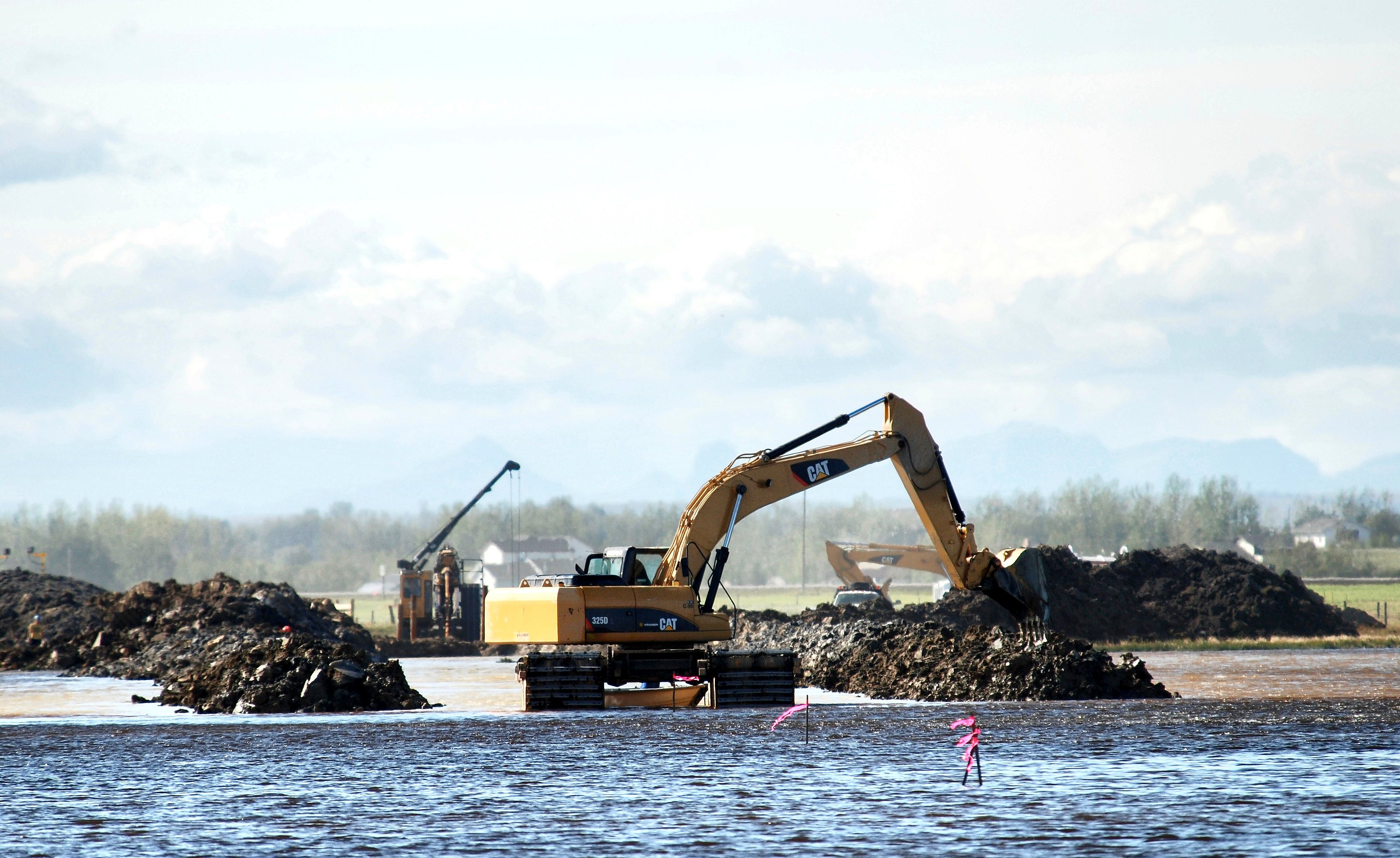
Anybody can move dirt. Not everybody keeps the machine out of the water.
Every Steady Eddie arrives already knowing how to work. Then you teach it your machine, your way. And when a job needs a hand nobody else has, you hire one by name.
It arrives working. You make it yours. You can hire a name.
One machine, three ways of working to choose from, and a person chooses which one before every job.
It comes knowing the job.
Every unit is built to arrive knowing how to run the common machines. That set is to be built from recorded hours of operators who agreed to it, on real ground. Fit it, calibrate it, and it works the way a competent hand would.
Nothing to set up and nothing extra to buy. This is the floor, not the ceiling.
Included with every unit
Your machine, your operator, your way.
Put STE Trainer in the cab and your best operator in the seat for a while, and it learns that machine, in that cab, on your ground, from the person who already runs it best. Your field, your pit, your standard.
It stays yours. Your operator, your iron, your way of working. It runs on your machines and nobody else's unless you say otherwise, and any licence over it is issued through Tacit Tessera, with a count of every hour it runs.
The one we tell owners to do
The hand nobody else has.
Some operators are known well past the yard they work in. Name Hire puts that operator's way of working on your machine, under their name, for your job, and pays them for every hour it runs.
Their name is on it. The list is short. Nobody else on your road has them.
The specialists, by name
All three end the same way, with something proposing and a person authorizing it before a machine moves.
One is a kit you borrow. The other is a name you hire.
They get taken for one thing because the same kit makes both recordings. What differs afterwards is whose way of working it is, who it is held for, and who is paid.
A kit in a case that rides in your cab and records. It is how an owner teaches a unit to run a machine the way they want it run. It is fitted, it records, it goes back, and the way of working it captures is held for the owner: their operator, their machine, and it runs on their machines and nobody else's unless they say otherwise, and any licence over it is issued through Tacit Tessera.
An agreement rather than a tool. A named operator's way of working, licensed for your job, under their name, with that operator paid for every hour it is in a seat and able to end it. We record it with the same kit. Everything after the recording is different: whose it is, who is paid, and how it ends.
Steady Eddie collects skill sets two ways: the hands its own Trainer brings in the cab, and the machine packages it writes itself. Even Steven owns what is made of every one of them, and Tacit Tessera numbers them, licenses them and counts every hour they run. Our mark sits on the tile as the house that collected it.
An owner who only wants their own machines running their own way needs the first and never the second.
It learns by watching your hands.
You sit in the seat and run the machine the way you always have. Eddie is out of the seat, and nothing of Eddie's is connected, control units included. What does the recording is STE Trainer, a separate kit of its own. It rides in the cab, wired to nothing on the machine, so nothing can move anything. It notices where your hand pauses on the stick, how you bring the throttle up before a swing, how you feather the bucket into the face when you cannot see the bottom. On a tractor it is the same: where you slow at the headland, how you take the wet corner.
The learning itself is done away from the machine, from those recordings, and comes back as an update a named person signs for. From then on, when a person tells it to go, it works your way.
It never learns from a machine running on its own. It learns from a person in the seat, and only while that person is driving.
The obvious economy would be to record through the unit a customer already has, and we refused it. Eddie takes its power from the machine, so a recorder inside Eddie is a recorder on the machine's supply. A separate box with no wire to the machine is something a person can walk up to and photograph.
- It cannot move a machine, or stop one. There is no actuator in the case and no wire to one. It is not an interlock and it is not a guard, and no part of a safety case rests on it.
- It cannot make a machine faster. It is a recorder. Nothing about the machine changes while it is in the cab.
- It cannot stay. It comes off in an afternoon, photographed before and after, and leaves no mark.
The kit comes to you. Your operator teaches it on your own machine.
We ship STE Trainer to you for an agreed period, your operator teaches it on your own machine, it comes back, and your unit is set up from that capture before it ships.
- We calibrate a kit for your family of machine and ship it.
Each kit is cut for one family and leaves the bench with a known calibration, in a sealed case.
- It is fitted to your machine.
Brackets, targets, sleeves, sensors and the camera, clamped to the machine's own controls. Eddie is out of the seat and disconnected, or not on the machine at all. The fitting produces a profile of that machine, a photograph of the disconnected state, a meter check and a record of the set-up.
- Your operator works.
They run the machine the way they always have. Each session is signed as it closes, and each one is later admitted or refused by name.
- The kit comes back.
The case, the sessions, the survey of your machine, the calibrations, the photographs that show the machine came back as it went, and the refusals with their reasons. It all comes back to us, the sessions are held for Even Steven, which owns what is made of them, and the register is sent none of them.
- We build it and check it.
Built away from the machine, from the sessions that were admitted, and checked before it goes near a unit.
- Your unit is set up from it, and then it ships.
It arrives working the way your operator works.
The fitting is also the survey. One trip records your operator and measures your machine, so your unit is built to a machine somebody put a tape on rather than to a class of machine. And it works on a machine with no unit fitted, which is every machine on the day somebody decides to buy one.
Your hands, the machine's answer, and your screen.
Three things, recorded together and timed against one clock inside the case, because apart from each other they are not a technique.
- Where every lever sits, and how fast it is moving.
- The pedals, the travel levers and the throttle dial.
- Every switch on the crown, each press witnessed by its own dry contact, with none of the machine's wiring touched.
- The force at the grip, sampled faster than anything else in the case, because the moment a lever breaks away from its detent is short, and it is where the technique shows.
- How far each cylinder is out.
- How the chassis is sitting, and how it moves when you load it.
- Where the house is pointed, and how far it swung to get there.
- Position is read at a steady rhythm chosen so nothing downstream has to stretch the record to fit.
- Overshoot, settling and hunting, which are what make this a record of a technique instead of a log of a joystick.
Two of those, how the chassis sits and where the house is pointed, are specified, and the part and the method that sense them are being settled now.
- The camera frames your display and both your hands, and as little else as we can manage.
- The display is what the machine told you at the moment you acted, and nothing else in the case reads a screen.
- Your hands are where they were on the grip.
- The picture sits inside the same chain as the readings, so an altered picture fails the same check.
The frame is kept tight on purpose. A camera pointed at a dash is also pointed through a windshield, and whether somebody who crosses that frame is covered by your operator's own consent is a question for the agreement rather than for the kit. Until it is answered the camera looks at the display and the hands, with the glass at the edge of the frame.
Every control swept through its full travel, slowly, twice. The weights hung on each grip, which is what makes the force reading mean anything. The camera's picture checked, and the person in the seat named. Then start, and the day goes the way it would have gone anyway.
Every session says who was in the seat, which machine, and how it was fitted.
A session is one continuous recording, from the moment a person presses start to the moment a person presses stop. Admitting it is a procedure rather than a judgement, so it is written as one.
- Who was in the seat, and the agreement that covers them.
- Which machine, and which profile of that machine.
- How the kit was fitted that day: the photograph of the disconnected state, the meter check, the bracket set-up.
- The calibration taken that morning.
- A chain over the whole record, blocked in short spans and signed once at the end, so any alteration is pinned to the span it happened in.
- A field the record needs is missing.
- The chain does not verify. The reason names the first span that failed.
- The agreement covering the recording was not live at the time it was made.
- Something of Eddie's was connected, or the photograph or the meter check is missing.
- The machine or the profile does not match.
- The morning calibration is not the one on file, and the reason prints both.
The ground, the material and the weather are flagged when they are missing and never refused. An operator who is working does not stop to fill in a form, and a procedure that refused them would keep the wrong sessions.
A box ticked in software is a claim software makes about itself. A photograph of the seat and of every control-unit connector, carried inside the record where it cannot be swapped out quietly, is a claim a person made and can be held to.
Every reason on that list is about equipment or paperwork, and no check anywhere grades how you dug. A refused session is kept rather than thrown away and the reason travels with it, because a record of what went wrong is worth as much to us as a record of what went right. Whether a recording is good enough to learn from is a bar somebody has to set, and until it is set the kit measures and declines to judge.
Say you run an air seeder.
Seeding will not wait for a hiring ad. The seat is empty at the one time of year you cannot afford it to be.
Your best hand seeds the way they always have.
Eddie is out of the seat and nothing of Eddie's is connected. STE Trainer, a separate kit, rides in the cab and does nothing but watch. They run the field, the headlands, the wet corner they always ease through. Nothing about their day changes.
It knows your field and your seeder.
Your ground rather than a field out of a book. How they handle the drill on that ground, where they slow, how they turn. That way of working is now held for your operation.
You say go. It seeds the pass their way.
Eddie sits in the seat, buckled in with the lap belt. You choose whose way of working is in it, you start it, and you can stop it three different ways, one of them a red release you pull by hand. You are close by, checking the drill and the tank, not steering. The pass gets done the way they would have done it.
Some jobs want the hand nobody else has.
For those, you hire a name for the pass and nothing else changes: the same seat, the same drill, and somebody on your crew still says go.
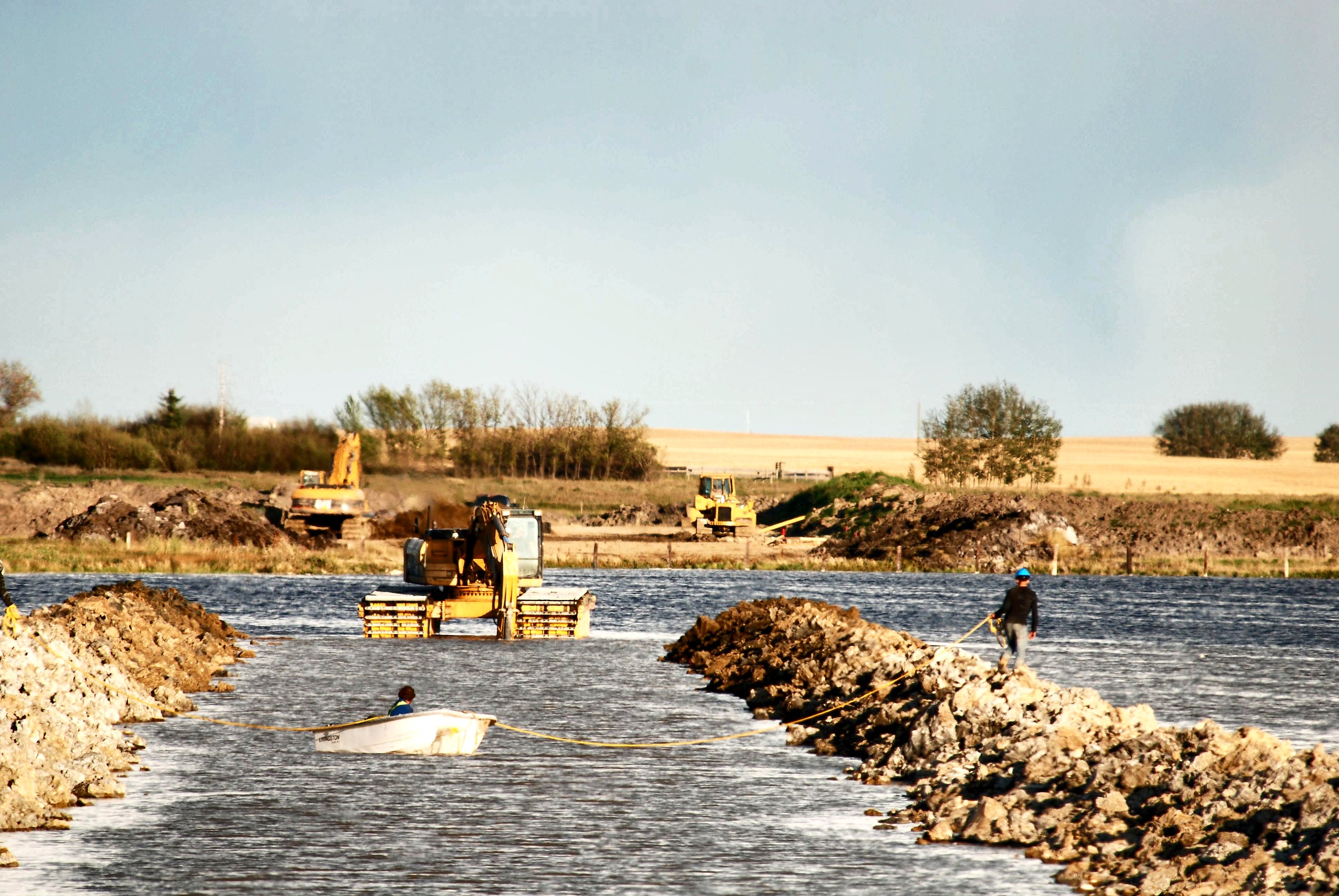
The best operators are known for what does not happen.
A careful day and a lucky day look the same afterwards. Same buckets. Same shift. The difference never shows on a timesheet.
Nothing moves until a person says who is driving.
Every time it starts, it asks one thing first: whose way of working is in the seat today? The basic set it came with, the way your own operator taught it, or a specialist you hired. A person picks, and the choice is written down with their name on it.
That one act does two jobs, and neither was designed around the other. It is the human authorization the machine may not move without, and it opens the count the licensed operator is paid on. The count is kept at the machine in a signed record both sides read, and Even Steven, which holds the operator's agreement, pays on it.
Nothing runs because it ran yesterday. Nothing blends two ways of working into one. Somebody chose, every time, and the record says who.
- No default, and no last used. A machine that picks up yesterday's choice on its own has moved on nobody's authority. Choosing is an act, not a setting.
- The list says what each one is. Which of the three ways in it came from, whose name is on it, and which version. Somebody who has to authorize the work is entitled to see what they are authorizing.
- A refusal is a fair answer. The list can be empty, or nothing on it may suit the job. The machine then works the way it works today, with a person in the seat.
One taught way of working serves one family of machine. It is recorded on one machine of that family, and what it carries is the technique. The machine is carried by the calibration: Eddie works every control through its steps and learns where neutral sits, where the limits are and how each control comes back, every day it works, because controls wear and no two machines are the same. What counts as one family is a line we are drawing now, since it decides what one training buys.
A way of working proposes. It never authorizes.
A technique that has been loaded has no authority of its own. Nothing moves because a way of working was loaded.
- It sits at the bottom of the order, never the top. Hard safety limits outrank every person, and every person outranks the software. A way of working is software. The whole ladder is on the safety page.
- Loaded is not authorized. Fitted, calibrated and ready are states a unit can reach on its own. Cleared to work is a person's word, typed on the day.
- A person starts the machine, every session. Somebody walks around it, completes the pre-start, starts it and clears it before Eddie engages a control. Nothing moves because a way of working suggested it.
- Nothing is learned on the machine. The learning happens away from it. The machine cannot reach into the place the learning happens, and that place has no way in to the machine. The only thing that crosses is a signed release with a person's name on it.
- While it is being recorded, nothing of Eddie's is connected. Eddie is out of the seat, the control units are not connected, and the kit doing the recording is wired to nothing on the machine.
- Three ways to take control away, by hand, at the machine. Any one of them stops it dead, and the machine's own safeguards are all still there underneath. What each of the three does.
- We do not say it makes your machine faster. A better way of working makes better decisions about when to move. The machine's own hydraulics set the rest.
The hand nobody else has.
The trade already knows who does not put machines in the water. Name Hire puts that operator's way of working on your machine, under their name, for your job, and pays them for every hour it runs. This is what you are hiring, how you start it, and how it ends.
A number would rank them last.
On blind, wet or soft ground every measure you could rank by turns on you. The careful hand works slower, right up until the quick one is in the water. Feeling for a bottom you cannot see takes constant feathering, so a count of corrections reads the skill as its absence. On mats in standing water the platform moves when you load it, and what a machine calls overshoot is a person compensating for their own footing.
So the list is built by name, not by score.
Asked for, then checked.
Named by people who have worked with them, then checked against their record. Reputation finds the operator a number would reject; the check stops the list becoming a popularity contest. Being good is not the bar. Being asked for is.
The list is short on purpose, and it will never be a directory of everyone with a ticket.
One operator's way of working, with their name on it.
For the family of machine it was taught on, in the same seat you already use. How they read ground, where they slow, what they refuse to do. It is never mixed with your own operator's way of working or with the basics the unit came with, and nothing on your machine changes.
You pick them before the pass.
The same way you pick who drives. That one choice is both the authorization and the count. You are charged for the hours their way of working is in the seat, from the same record that shows who authorized the work. You will see the hours. So will they. It stops the moment you choose something else.
You are hiring how they work.
It is not them on your site, and it is not a person for the day. It cannot be passed on to anyone else, and it runs only while a person on your crew says so.
The hire ends with the job.
If they withdraw their way of working, no new job starts under it from the day it arrives, and the job you are running finishes, because stopping a machine mid-pass is its own hazard. Then it comes out of service and your machine goes back to what you already had: your own operator's way of working, or the basics it came with.
You are asked for by name, and we come to you. You run your machine the way you always have while STE Trainer watches, and nothing about your day changes. Your way of working is yours for good. What is built from the recording is a tool that runs under your name and pays you every hour it works; your way of working stays yours.
Four things that did not happen.
Every one of these is a bill you never got, a day you never lost, and a phone call you never had to make. A quick operator is easy to find. This one is not. That operator is who Name Hire is for, and the reason the list is short.
- 01The machine that did not go in.Working blind below the surface, off a platform that shifts every time you load it.
- 02The line that did not get undercut.Cutting to a grade you cannot see, marked by a flag and held by feel.
- 03The dugout that did not slump.Cut to a slope by eye, in clay that looked fine right up until it was not.
- 04The call that never had to be made.Nobody sent to pull anything out. No damage to explain. Everybody home on time.
The highest value in this trade shows up as an absence, and nothing a recording counts can see one. So the list is built by name first and measured second.
Three things, and where each one sits.
Steady Eddie and Strategic Agent require skill sets. Even Steven owns what is made of them. Tacit Tessera licenses them to OEMs and to AI. An operator keeping their skill and a house holding what is built from it are only compatible if the three things are kept apart. This is the hired case. A way of working an owner teaches on their own machine is held for that owner and used on nobody else's machines without their word, and any licence over it is issued through Tacit Tessera.
| The thing | Whose it is | What a withdrawal does to it |
|---|---|---|
| The technique, in your own hands and your own career | Yours, and not for sale. We never ask to acquire it and we would not take it | Nothing. It is untouched, always |
| The recording of you working | Information about you. The recording is Even Steven's as an artefact, held for you, and what may be done with it is yours to permit and to withdraw. Even Steven administers your rights and nobody else does | New work stops, and where it was used to build a model it comes out at that model's next revision, on a date stated before you sign |
| What is built from it, the thing a unit runs | Owned by Even Steven, for the person it came from, and licensed through Tacit Tessera to whoever runs it. We collected it, we built it and we check it, and our mark is on it as the house that collected it | It comes out of service, because the licence under it is gone |
An operator does not sell their skill. Their skill stays theirs. What is built from the recording is owned by Even Steven, held for that operator, and licensed through Tacit Tessera to whoever runs it, with the operator paid for every hour it is in a seat. The trade knows the shape from recorded music: the writer keeps the song, the house that holds the paper owns the recording, and the writer is paid every time it plays because they kept the song. Take the song off the writer and the reason to pay them goes with it.
- Four consents, each given on its own. One to record at all. One for your work to be held alongside other operators’, never blended into theirs. One for a way of working under your own name. One for the record to be used to train a model, asked for on its own and never assumed. You give them to Even Steven, the one house you sign with, and nobody else administers them. Each is withdrawn on its own too, so you can say yes to a recording and yes to your own name and no to being held alongside others, and the no is honoured without emptying anything else.
- You can keep a set away from a use, or away from a house. You may keep a set away from any named use, or away from any house, and that condition is carried on the Card and in the licence.
- A licence comes in three kinds. One to run a way of working, one to build a model with it, and one to build and sell a model derived from it. Each carries a term, a field of use and a territory, and each is issued through Tacit Tessera.
- Registering it does not mean handing it over. Putting a way of working on the register does not mean handing over the material it was made from.
- Withdrawal stops new work the day it arrives. The job already running finishes and it comes out of service after that. Where your record was used to build a model, it comes out at that model’s next revision, and the agreement states that date before you sign it.
- What a withdrawal obliges us to do. Find every session and every built thing that saw your work. Stop the work running under it, and where your record was used to build a model, take it out at that model’s next revision on the date you were given. Rebuild what can be rebuilt without you, withdraw what cannot, and tell you when each is done. Nobody will tell you a model has forgotten you. The withdrawal itself stays on file, because a record that deletes its own withdrawals cannot show it honoured one.
Privacy law and the agreement, and we would rather say so than reach for something stronger that is not there. Copyright protects expression rather than method, and a way of cutting a slope is not an authored work. What is real is that the recording is information about an identifiable person, and Alberta's own privacy law and the federal one attach consent and withdrawal rights to that directly. The entitlement to be paid is created by the agreement itself. How we handle personal information.
What we can show you is engineering. Eddie works the machine's own controls: nothing is cut, no harness is tapped, no controller is flashed, and the machine's own safety systems stay in place and operating. Whether an installation affects a warranty, a conformity assessment or a liability position is for your counsel. We will not give you a legal opinion, and you should not accept one from any vendor.
The test every clause has to pass.
Would it still be acceptable if the two sides swapped places? Where the answer is no, the clause is not in the agreement. Every protection on one side is written against its counterpart.
| What protects you, the operator | What protects us |
|---|---|
| Your skill is yours forever. You keep working, teaching and competing. | What is built is owned by Even Steven, for you, and it is licensed through Tacit Tessera rather than sold on. Nobody can take the finished article to somebody else and sell it, including us. |
| Ending it is free. No penalty, no clawback, no fee for walking away. A right that costs money to use is not a right. | The job already running finishes, so a machine is not stopped mid-pass and the people running it are not left short. |
| You are told the dates. When new work stops, and when your record comes out of a model that used it. | One clear record of what was agreed, so nobody argues later about what was said. |
| You see the count and what you are owed. | We pay on real, checked hours and not on an estimate. |
| Nothing goes anywhere without your yes. | No passing it on. Whoever hires it cannot hand it to anybody else. |
| Nobody borrows your work quietly. A way of working taught on one owner's machine is held for that owner and used on nobody else's machines without their word, and any licence over it is issued through Tacit Tessera. | The same story to everyone. What we tell a buyer is what we told you. |
| You are told what it can and cannot do, in the same words we use with a buyer. | We do not overclaim it, so nothing we sell has to be walked back later. |
If it is your way of working that gets hired, this is what stays yours.
You sign with Even Steven, the one house that holds an operator's paper. These are the five points the arrangement is built around.
Your skill stays yours.
Nothing here stops you working, teaching, bringing on apprentices or going somewhere else tomorrow. We never ask for that and we would not take it.
Paid every hour it works.
No lump sum and no handshake. A share for every hour your way of working is in a seat, for as long as it is. You are paid because you kept it. The rate for a named way of working is set on the operator's own agreement, not here, and it is published where that agreement is, in words anybody can check. We quote no figure of our own.
Your name on it.
If a machine is working your way, it says so. The name is the whole point of Name Hire, and it stays attached to you.
You can end it.
Give notice and nothing new starts under it. The job already running finishes, because stopping a machine mid-pass is its own hazard, and that is the one delay in it. Nothing is charged for leaving and nothing already paid is clawed back. Where your record was used to build a model, it comes out at that model's next revision, and you are told that date before you sign.
You can check the count.
The count is kept in sessions, and a session carries its own identifier and signature, so it counts itself. You see the hours it worked and what you are owed. The hours are counted at the machine, in a signed record you can read, so you see the count for yourself.
Two more sit in that arrangement, for the person with the least room to say no. If your own employer is the one recording you, your protections travel with you rather than with whoever is paying: the right to withdraw, the date your record comes out of a model built with it, and the right to know what is recorded. And a way of working you taught your employer's machine does not quietly become something anybody licenses elsewhere. That takes a fresh consent, given by you.
Our own machines and our own crews come first.
STE Trainer, the loan cycle, the record it writes and the checks that admit or refuse it are designed, specified and written down, and that design is what this page sets out. The first recording is the next thing we do, on our own crews and our own machines, and before the first taught unit ships we owe ourselves one comparison, that a way of working recorded on a machine with no unit fitted runs true through a fitted one. We would rather you read that here than find it out for yourself later.
We are fitting it to our own machines first, with our own operators, on our own ground. We work it out on our own people before asking anyone else to take part, and we would rather find the awkward questions ourselves.
The terms sit on the operator's own agreement with Even Steven, and they are published where that agreement is, in words anybody can check.
If there is a hand on your crew you could not replace, or you are that hand, tell us. There is nothing to sign and we will keep you posted.
Short answers, for the operator, the owner and the people who can say no.
Your skill stays yours and we never ask for it. What is built from the recording is a tool that runs under your name, and you are paid for every hour it is in a seat; your way of working stays yours. You are named, you will see the count, and you can end it with notice, at no cost, with the date your record comes out of any model built with it.
A unit arrives working. Teach it on your own machine with your own operator and that way of working is yours, taught on one machine of a family and serving that family. Hire a name for the jobs that need one, by the hour. Somebody on your crew chooses whose way of working is in the seat before every job, and that choice is both the clearance and the bill.
A way of working proposes and never authorizes. Hard safety limits outrank every person, and every person outranks the software. A person starts the machine every session and clears it before Eddie engages a control. No update reaches a machine without a named person signing for it, and the three ways to take control away by hand are unchanged. The safety page has the rest.
The operator's right rests on privacy law and on the agreement rather than on a claim over the technique, and we say so instead of reciting something that is not there. Consent is checked live at every recording, the four consents are separable and revocable, and the date a record used to build a model comes out of it is stated before signing. We make no representation about your machine's warranty, its conformity or your liability position: those are for your counsel.